|
|
|
by Miles H. Hodges – The Covenant Nation The Vets’ fear of authoritarianism shapes
deeply the development of the Boomer generation Given the high level of anti-Communist hysteria found among a World-War-Two Veteran generation (the “Vets”) that had fought the authoritarianism of German and Japanese Fascism in the 1940s and now found themselves facing that same authoritarian threat from a spreading Communism in the 1950s, it was hardly surprising that the Vets became increasingly concerned about the vulnerability of their own children, the children born of the post-war baby boom (beginning in 1946), in the face of this spreading authoritarianism. Thus it was that as the 1950s developed, the Vets went on a very strong anti-authority campaign ... teaching their children not to accept anything on the basis of it having been put before them by someone in authority ‒ even being cautious themselves to avoid such authoritarianism at home. Instead, their children were taught to “think for themselves” ... and thus remain resistant to any form of authoritarianism. Tragically, it never crossed the
minds of these Vets that their children would have to come up with social
standards to live by from some kind of source or other. Vets just assumed (most naively) that social
instincts arise simply by nature ... for everyone they knew lived and moved
under a fairly uniform (Middle American) social order. They did not realize that such uniformity had
been shaped by the deep challenges Americans had faced since the onset of the
Depression (when the Vets themselves were children and youth) and by the
extreme social demands of slugging through World War Two ... when everyone
served, either in uniform or at home on the “Home Front.” The Vets had developed and served within the
context of a highly disciplined social order. Most unfortunately, in “freeing” their offspring from such social discipline (identifying it even as “authoritarianism”) they would be creating what would soon enough come to look to the Vets as young social monsters. 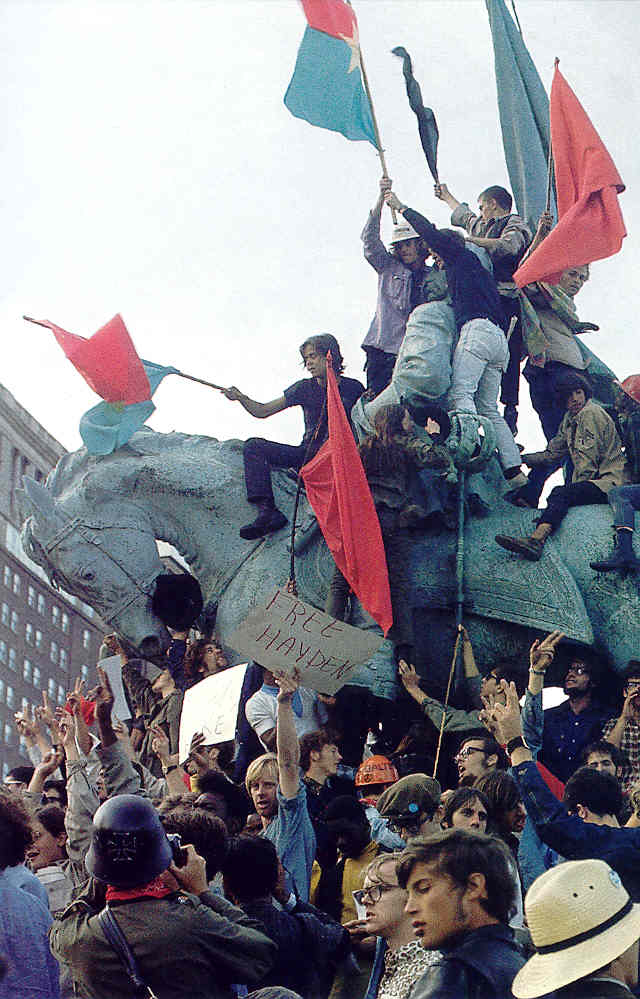 The brief but unique “Silent” generation The impact that this social
programming would have on America’s rising generations is demonstrated in the
strong differences between the way the young “Silent” generation and the even
younger “Boomer” generation developed in America’s post-war period. The somewhat older Silents were
patriotic in a way still typical of post-World-War-Two America … the Silents having
been born just prior to or during the war and thus being too young to have
served in the war. But they were very
strongly influenced by the older Vet generation – which was very patriotic,
something you would expect of those of a generation that had offered their
lives in defense against the horrible dictatorships that threatened the
freedoms of the world's many peoples (from Mussolini, to Hitler, to Tojo, to
Stalin, to Mao). It is therefore very important to
note that by the time in the early 1950s when the authoritarian panic hit full
blast among the Vets, the social-moral instincts of the young Silents (just
entering their teens) were already well in place. Thus the Silents would be a fully patriotic
generation ... like their elders, the Vets.
I know all this very well because I too was a member of this Silent
generation (born in 1941) In the 1950s and early 1960s the
Silents would evidence the distinct traits of any youthful generation ...
clothing, music, lifestyle, etc. But
they would be solidly American, and unapologetically so. They were a fully patriotic generation ...
ready to serve the larger American community however possible. This was the generation that in the early
1960s were quick to join the Peace Corps ... in order to bring their beloved
“American way” to the rest of the world. Boomer “anti-authoritarianism” But the Boomers, who were soon to
follow the Silents, proved to be a very different breed. They were born just after the war (1946 and
after) ... when “the boys came home” from their service overseas, were finally
able to get married, and make up for lost time in the years abroad ‒ by bring
forth a literal “boom” in babies. Thus
the huge number of children birthed during this post-war period came to be
known as the Baby-Boomers ... or just simply “Boomers.” The first of these Boomer children
were ultimately brought to social maturity in the early years of the 1960s ...
having begun their all-important social shaping during the years of the
authoritarian panic of the 1950s (especially the early to mid-1950s). When the first of the Boomers reached
early adulthood by the mid-1960s they were ready to have their huge impact on
the world around them. And this would
register itself in their fervent dedication to anti-authoritarianism ...
cultivated carefully in their earlier 1950s development. Mostly however at first this simply
registered itself as the social commands they seemed to operate under: to “be free” ... to “do your own thing.” Boomers therefore would prove to be
highly resistant to coming under any social order other than the one that they
shaped for themselves. But what the
Boomers (and their Vet parents) did not realize was that the Boomers would have
to develop that very sense of social order from some place ... from some larger
social context. And develop that social order deeply
they would do indeed. Being supposedly “non-conformists,”
they would amazingly conform ... however not to the social order of the
American generations that had gone before them.
That they were supposed to resist at all costs as an authoritarian
inheritance. Instead, they would conform
to a social order of non-conformity itself, one designed and well-located among
the Boomers themselves ... a non-conformity to which they would all conform
extensively! How ironic! They took up a very distinct
(“hippie”) attire and, music style (exemplified perfectly in the massive music
gathering at Woodstock in 1969) as a critical social identifier. But most of all, they felt
compelled, as some kind of great social crusade, to stand in opposition to virtually
everything politically, socially, and culturally that their parents represented
... the Vet social profile now identified as simply another form of fascism, a
fascism that Boomers were now dedicated (by way of their most bizarre social
development) to oppose on all fronts. They were not interested in their
parents strong social-cultural Christian inheritance. They did not see male-female roles as their
parents did. In fact they did not have
the family as the heart of American life ... but instead their own personal
professional development as life’s primary call. Thus church life began its unbroken decline, marriages
failed, women eagerly displaced men in traditional roles of leadership, and in
fact sexual behavior began to “come out” in all sorts of very non-traditional ways. The huge social impact of the Vietnam War But deepening greatly this
distancing of the Boomers from their parents’ Vet world was the Vietnam war ...
to which the Boomers were called to serve ‒ as generations before them had
served the American cause (World War Two and the Korean War). By the second half of the 1960s it was going
full blast ... just as the Boomers were entering the ranks of military
draftees. But this war was distant, abstract
... and not seeming to achieve anything ‒ except the horrifying death of a lot
of people ... both Vietnamese and American – the latter being the Boomers called
to serve in this conflict. Very quickly the tragic
pointlessness of the Vietnam engagement began to register itself deeply among
Boomer youth, Boomers taking to the streets (especially on college campuses) to
protest against the “imperialism” implicit in this Vietnam war. There was no way they would bring themselves
to bow to the “evil” this war represented ... no matter how much Washington
authorities and an older-generation America considered such patriotic national service
a matter of great importance. To the Boomer,
this call to patriotism was simply a call to embrace authoritarian fascism. The Boomer alliance with America’s
alienated intellectuals But the Boomer generation and their
revolt against “fascism” posing as patriotism did not stand alone. In this matter, Boomers enjoyed the strong
support of American post-Christian or Humanist intellectuals − especially its
younger group − who now saw the opportunity to swing things back against Vet
social dominance that had been so painful during the McCarthy years of the early-mid
1950s. Thus young professors were quick
to join their Boomer students in burning their draft cards in protest against
the oppressive injustice imposed on young America by the older “fascistic” Vets
and their Washington, DC government ... a
political enemy of the Boomers whom they summed up as the evil “Establishment” ‒
the very authoritarian structure they had been long-instructed to fight at all
costs. Thus in college and university
campuses across the country, Boomer students, joined by younger professors, took
up the call to protest fervently this war conducted by the Establishment ...
even burning flags as the ultimate symbol of their freedom from oppressive
patriotism. But they were also joined by Hollywood
... which began to undertake its own assault on “patriotic” Middle America and
all that it stood for. Thus the TV
series “All in the Family,” (running from 1971 to 1979) mocked the White male/father
Archie Bunker as being the most ridiculous of individuals ... absolutely unable
to get any kind of social-political thoughts right ... especially concerning the
issues running hot in the 1970s (sexism, racism, abortion, homosexuality,
religion, etc.). The popularity of this
program was a clear indicator of how far Bommer-intellectual or “post-Vet”
social thought was taking over the position once held by earlier Vet-inspired pro-traditional
family TV programming ...such as “The Adventures of Ozzie and Harriet” (running
from 1952 to 1966). The Vet programs had been quite
humorous ... but also very respectful of family roles. But this understanding of things was losing
ground rapidly. But all was not
lost. The TV program “Happy Days” fought
back ... portraying the earlier 1950s as indeed offering much happier
days.
But time was running out
for the Vets and their world. The maturing
Boomers were entering positions of social importance all across America. And in doing so, they not only rejected any
possibilities of returning to the well-tested American social order put in
place by earlier generations, they would make sure that their Boomer social
values (such as they had) were passed on to their very confused Gen-X offspring,
a new generation to come onto the American scene ... one that tried to grow up
within the confused context of their parents’ (most frequently divorced or
separated) Boomer world.
Miles Hodges is a writer,
historian and political analyst who explores the question of why societies behave
as they do ... especially in this matter of their rise and fall. |