|
|

 Mao's disastrous "Great Leap Forward" Mao's disastrous "Great Leap Forward" Mao easily builds his "Cultural Revolution" among China's youth Mao easily builds his "Cultural Revolution" among China's youth Mao and his young "Red Guards" bring down the older generations Mao and his young "Red Guards" bring down the older generations Mao purges the ranks of China's Communist leadership Mao purges the ranks of China's Communist leadership The whole affairs turns into another massive Chinese disaster The whole affairs turns into another massive Chinese disaster The textual material on the page below is drawn directly from my work,
|
|
| Having
secured Communist rule for China in 1949 by leading basically a huge
peasant army to victory, it seemed by the mid-1950s to the more
"conventional" Marxists of China that it was time now to turn the
dynamic over to the industrial-urban (not rural peasant) world … where
Marxist history was supposed to unfold. Thus Mao found himself
being put aside. He was still considered to be a heroic figure –
but not someone destined to take the Chinese revolution forward along
truly Marxist lines. Needless to say, this was not a political
trend that Mao was going to let happen. Somehow he was able to convince the Party leaders that he could push rapid Chinese industrialization ahead as effectively as he had won China for the Party with his peasant army. What he proposed to do as a new 5-year plan was to collectivize all the independent farms (even those recently turned over to his peasant followers) in order to make them part of the State's communal property … and then conduct an industrial revolution there … as well as in urban China. In fact with the huge rural workforce now employed as state laborers, the industrial revolution would move ahead even more quickly than if it were conducted solely as an urban operation. And the test or measure of the ingenious character of this new plan was that China's iron production – which Mao convinced his colleagues that all industry was ultimately based on – could take place across the nation's vast number of rural villages. True, the furnaces would be small. But they would be so numeric that the total production would put China way ahead as a major industrial producer. And so in 1958 his plan went into action as the "Great Leap Forward." But a leap forward it turned out not to be. First of all, the quality of the iron produced in these small rural furnaces was so inferior that it was totally useless for industrial purposes. But even worse, running those blast furnaces took a lot of peasant attention away from their fields … reducing enormously China's food production to near starvation levels. Consequently, the whole venture turned itself into a national disaster. Starvation and just sheer exhaustion cut through the Chinese population … killing millions of Chinese.1 Although the program was due to run until 1963, it was put aside in 1961 … as was also Mao once again. 1The estimated figures run from a low of 22 million to a higher figure of 42 million … although the numbers were so large and the statistics so poor that the exact number of Chinese deaths would never be known. |
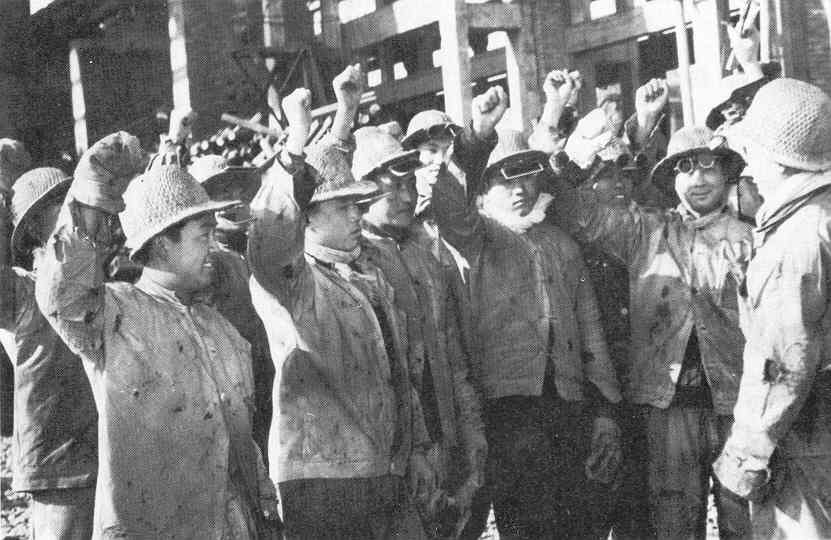
Chinese workers volunteering
to work unpaid overtime to surpass the British in steel production
late
1950s
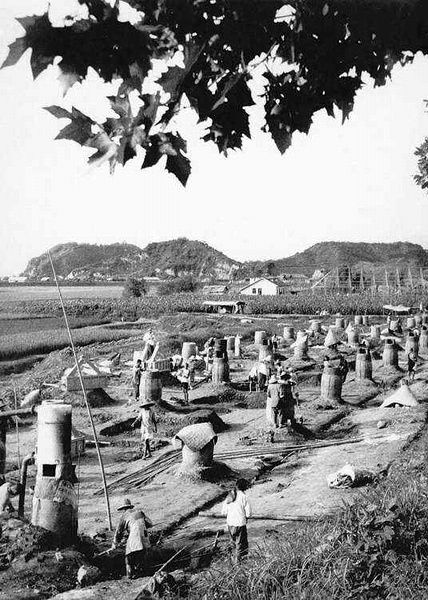
Backyard iron smelters created during the Great Leap Forward
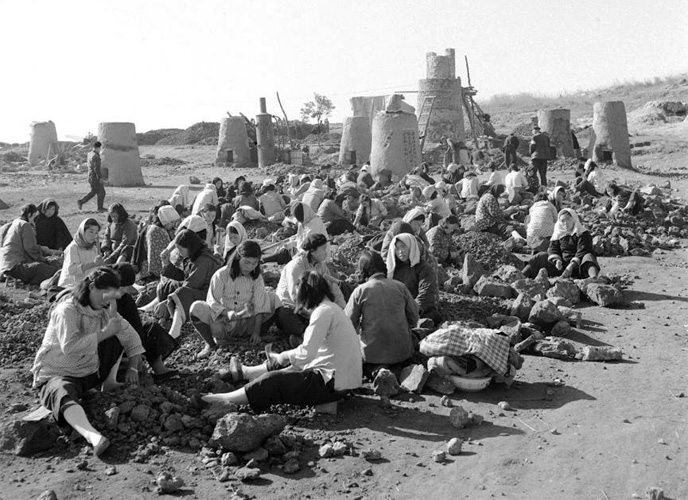
Chinese hard at work on their 'back yard' smelters
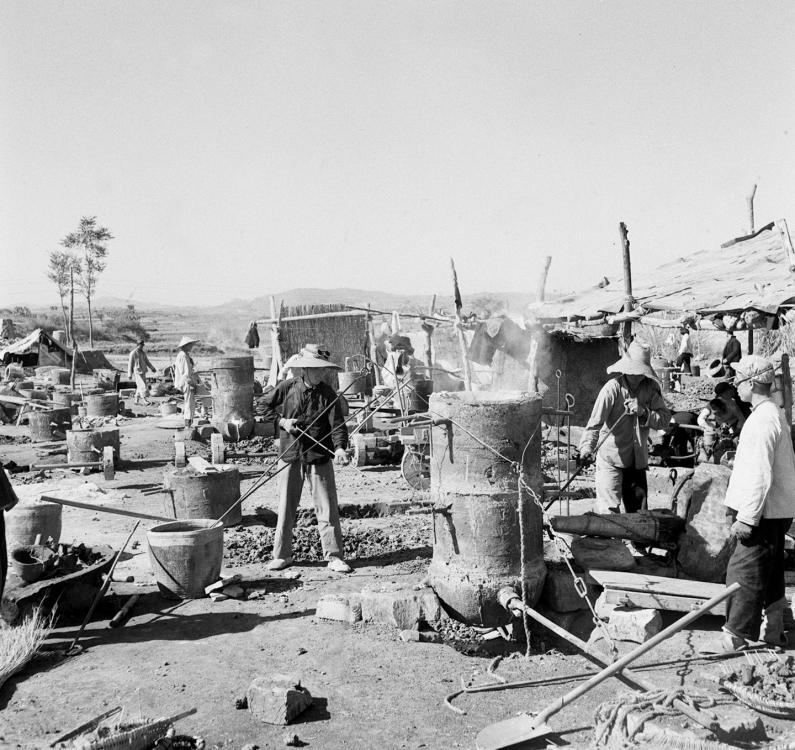
Chinese hard at work on their
'back yard' smelters
Chinadaily.com
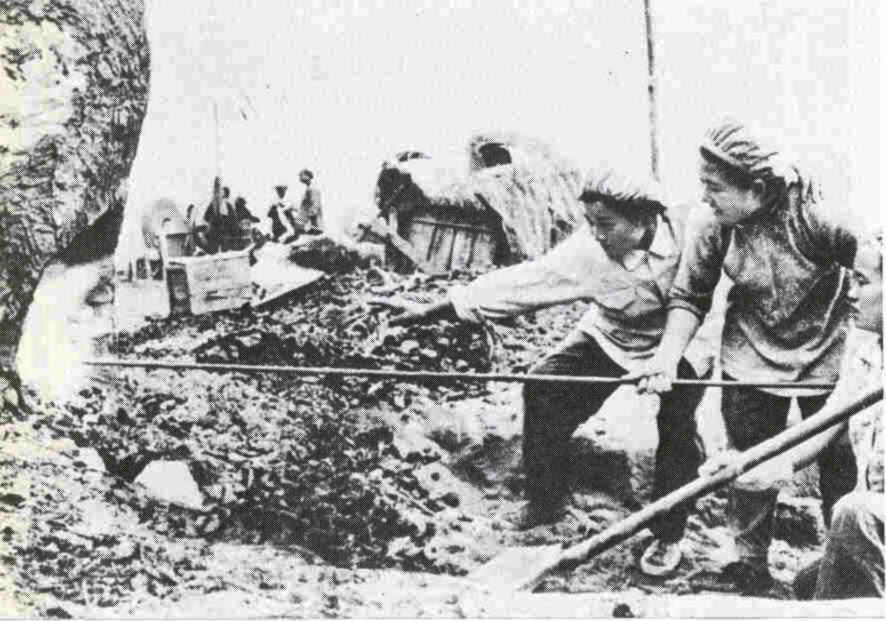
Chinese hard at work on their 'back yard' smelters
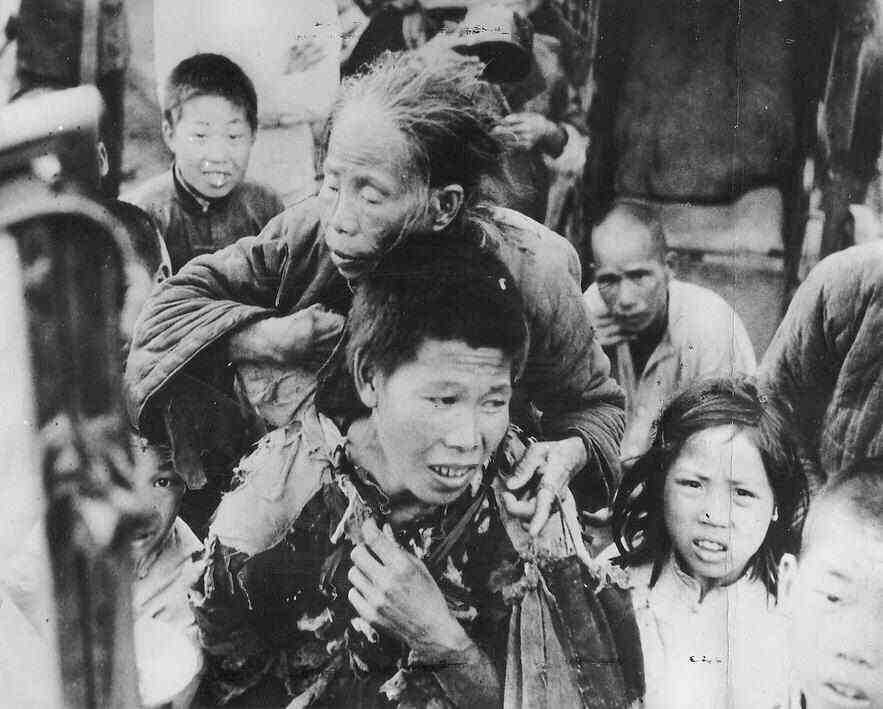
But by 1960 the problem of
hunger and mass starvation had become critical
|
| But
Mao was not one to be put aside. And watching how the Soviets
removed Khrushchev from power in 1964, Mao knew that he had to make
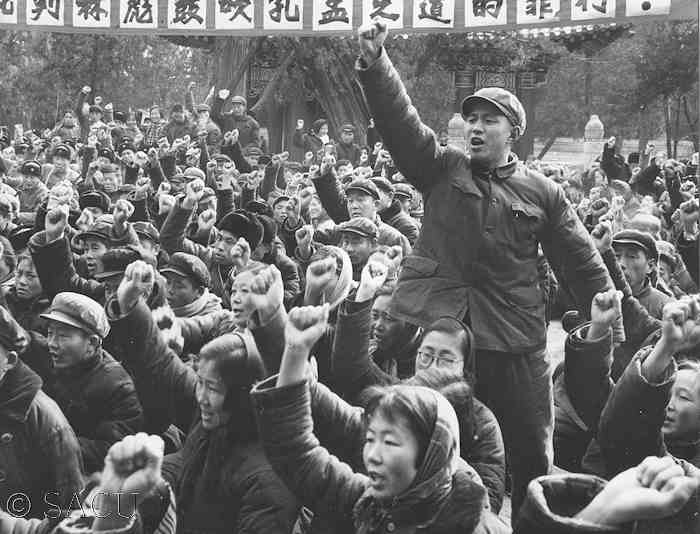
some kind of comeback … or he too might end up being "retired." He skillfully played on the fears of the Party's leadership of there being a number of "anti-party" members among them … and they needed to be purged before they could bring the party to ruin … and the Great Chinese Revolution to an end. Indeed, with his actress wife, Jiang Qing, he took this latter matter – the danger to the Great Chinese Revolution caused by wrong-thinking individuals – to the Chinese people themselves … to enlist their support in his "cleansing" operation. He even had a Little Red Book published that contained Confucius-like quotes from the Great Leader Mao himself, that the Chinese youth were supposed to learn and repeat in order to develop right-mindedness … especially necessary given the "capitalist" mindset that still lived on among many of China's older citizens. Indeed, these youth were ordered to form themselves into small companies of "Red Guards," designed to search out and bring to public shame individuals they discovered harboring such anti-revolutionary thought. In short, Mao was conducting a huge "Cultural Revolution" in China … through the loyal service of fired-up Chinese youth. Basically, Chinese society turned itself into an ongoing Revolutionary Festival, shutting down much of its industrial operation, local government, and formal schooling … in order to focus the nation's attention on street marches, bands playing, everyone singing, along streets lined with giant posters of the Great Leader himself. Consequently, all the fun was causing the Chinese economy once again to go into deep retreat. |
The Chinese Cultural Revolution of the mid-late 1960s
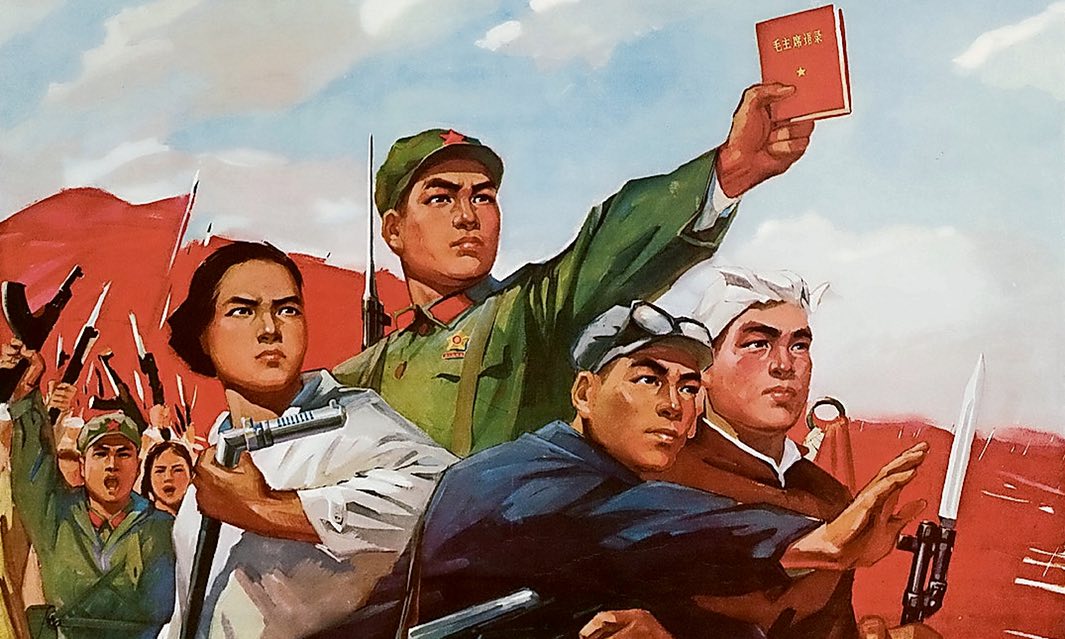
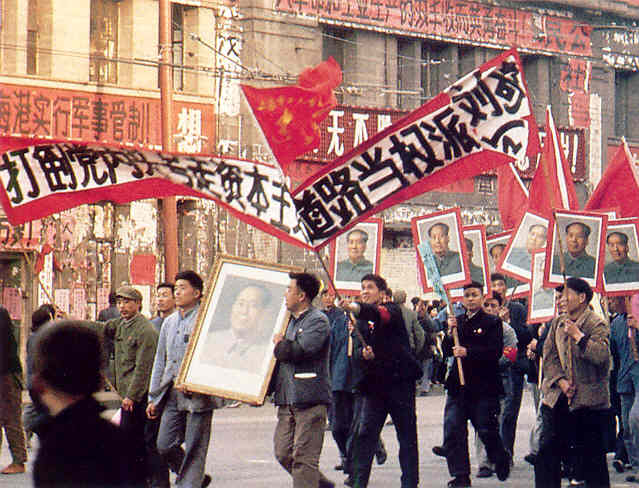
Chinese Red Guard -
1966
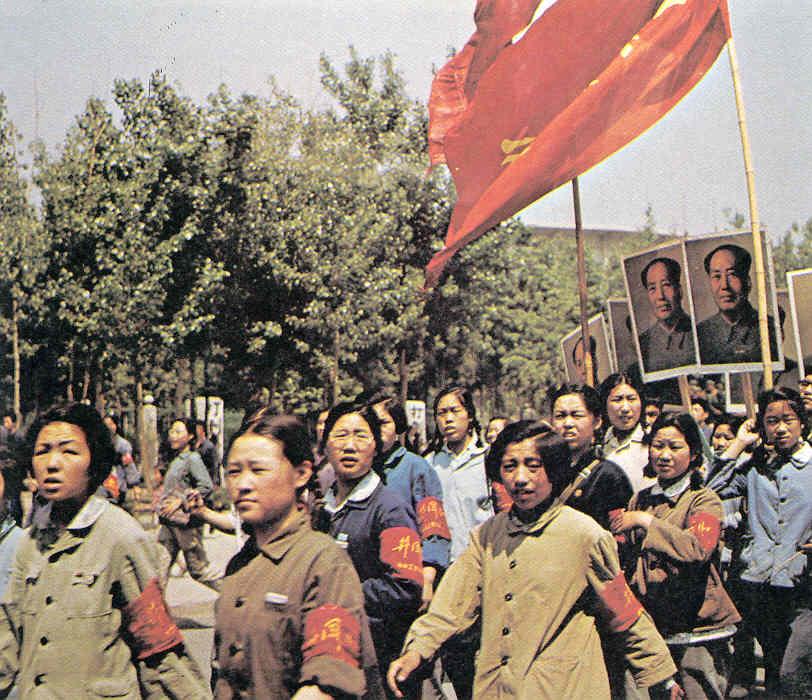
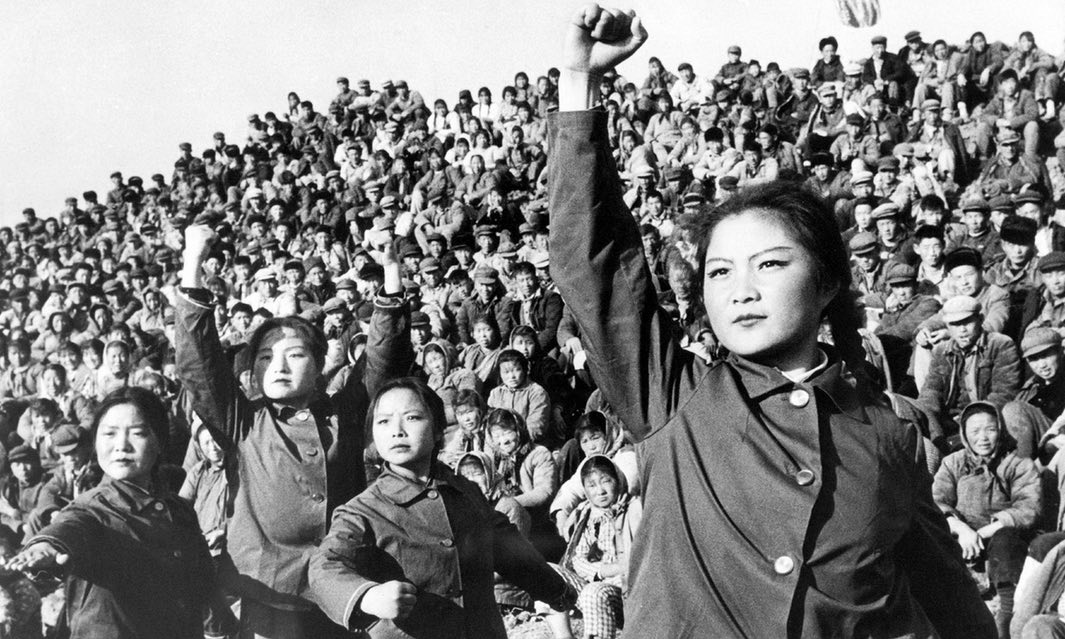
Youthful Chinese Red Guards
-- devoted followers of Chairman Mao
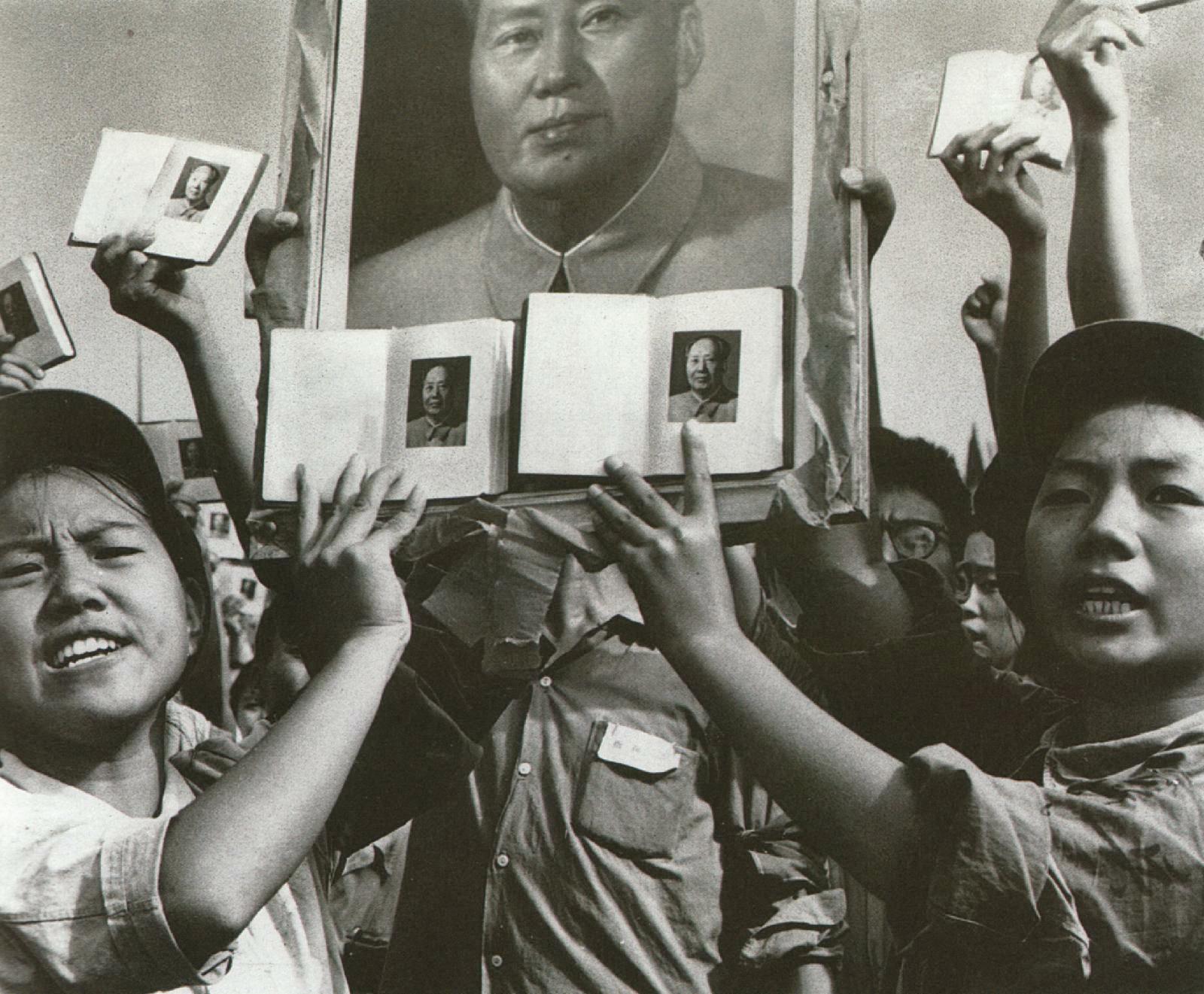
Mao's Little Red Book -
1966
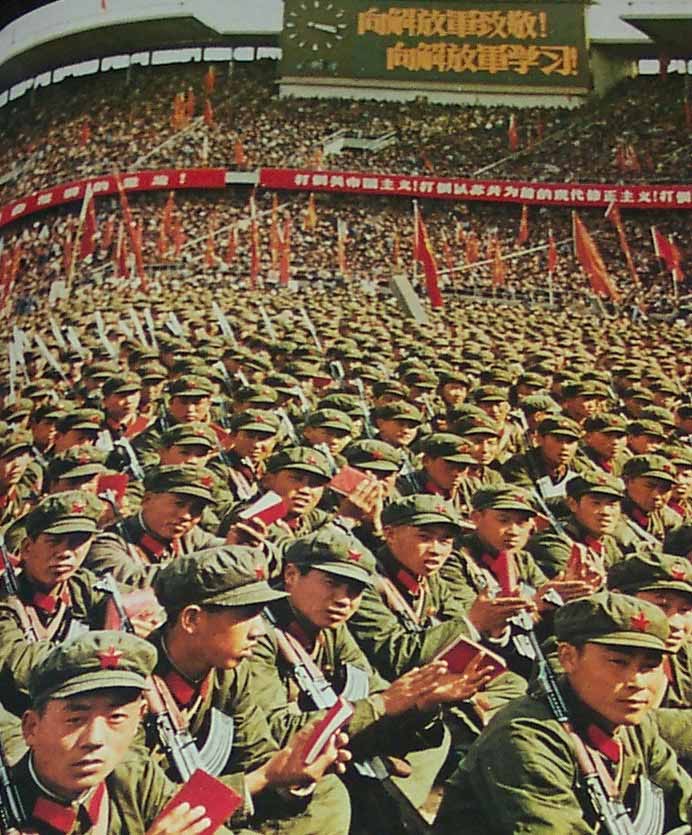
Thousands of the Chinese Red Guard gather to study Mao's Red Book
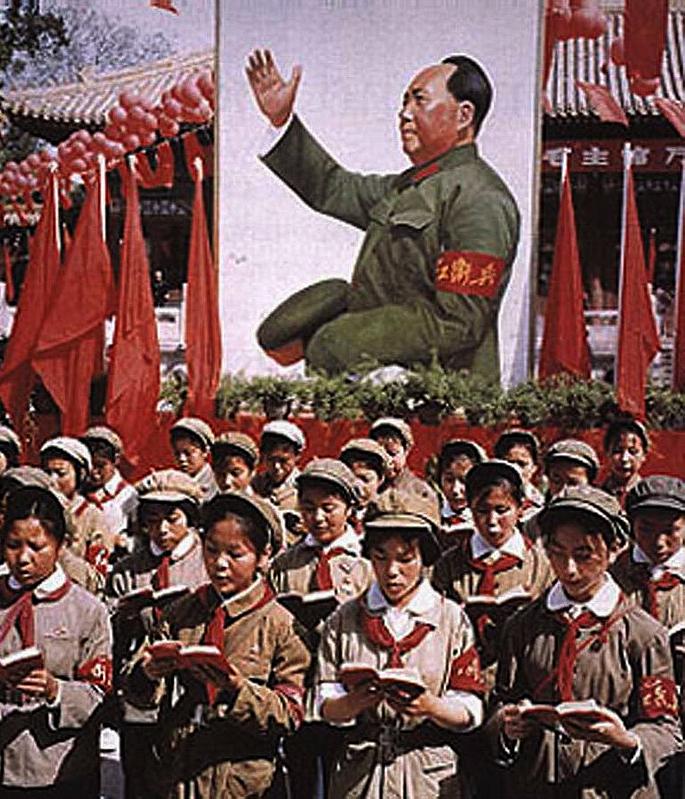
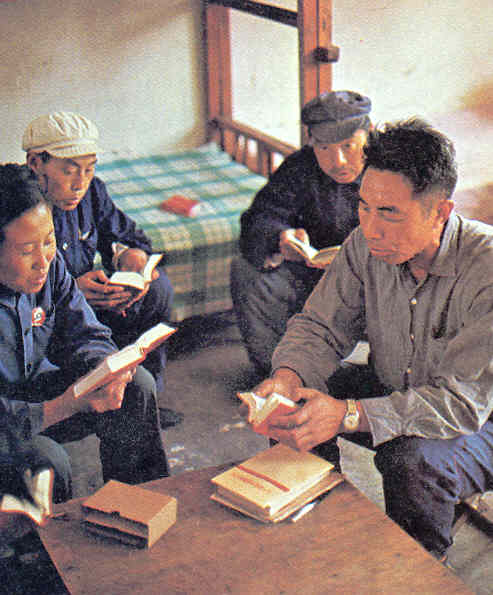
Studying Maoist
doctrine
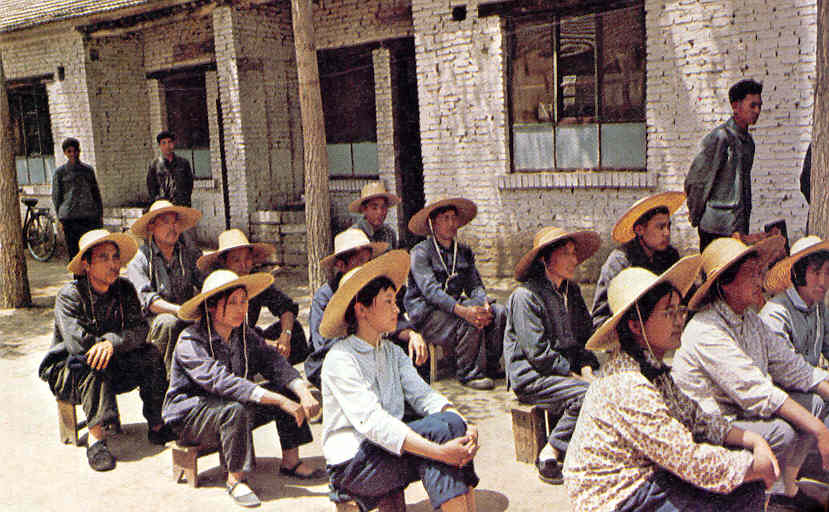
Maoist indoctrination
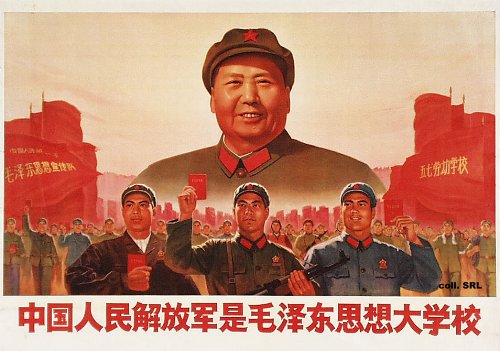
"The Chinese People's Liberation
Army is a University of Mao Zedong Thought"
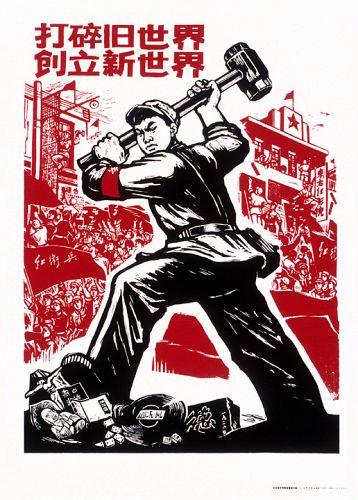
"We'll destroy old world
and build new"
A young worker crushes the
crucifix, Buddha and classical Chinese texts with his hammer - 1966
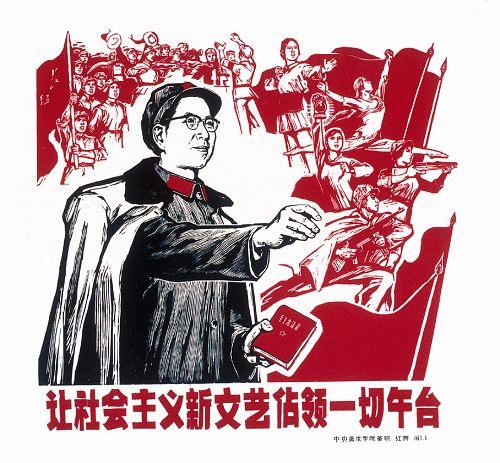
Mao's radically ideological
wife: Jiang Qing ...
"Let new socialistic culture conquer every stage"
- 1967
|
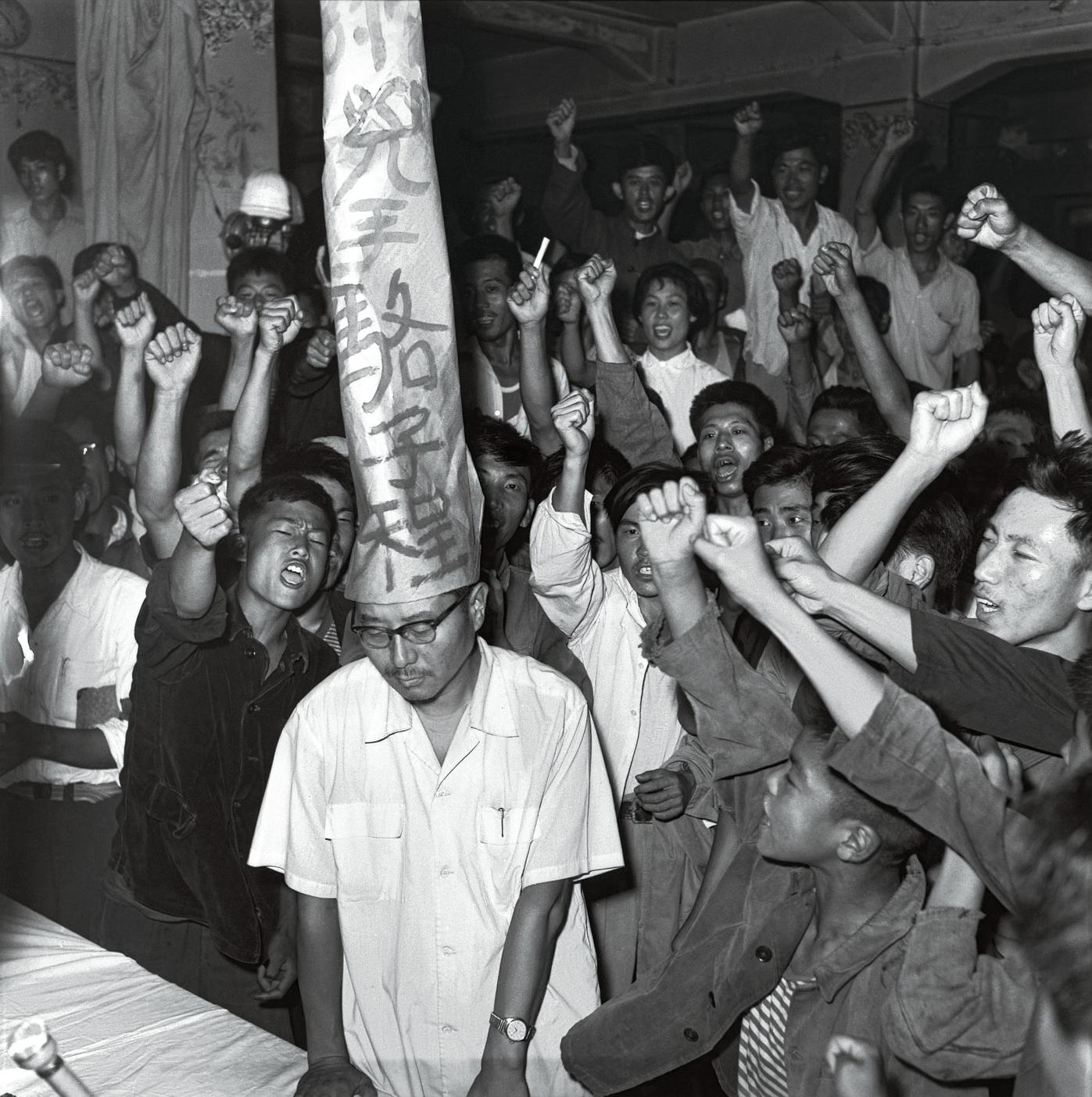
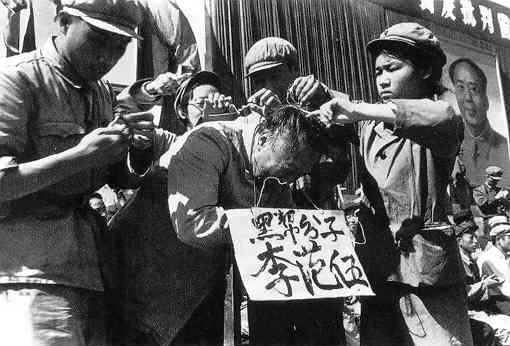
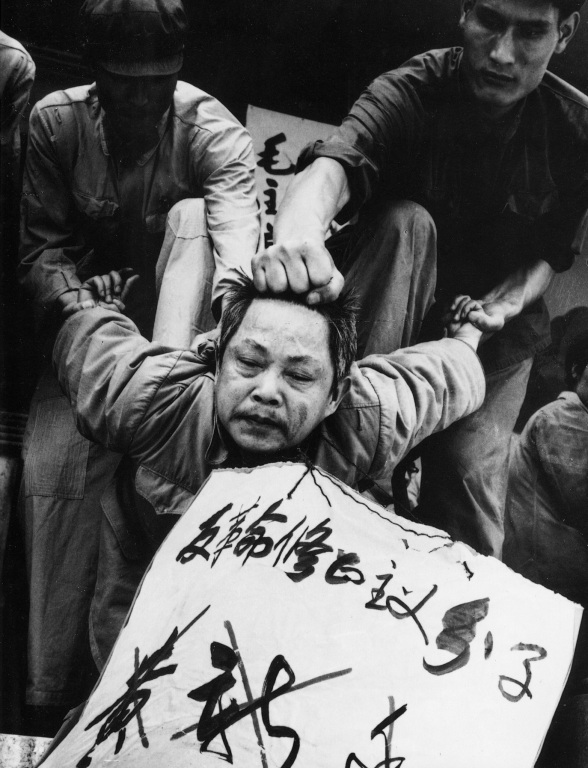
| But the Cultural Revolution was also brutal in its treatment of suspected anti-revolutionary individuals … hundreds of thousands (maybe even a million) killed by self-appointed members of the Red Guard. But Party officials also underwent a process of Maoist purging … including the party's General Secretary Deng Xiaoping (1966) and the Chinese President Liu Shaoqi (1967). |
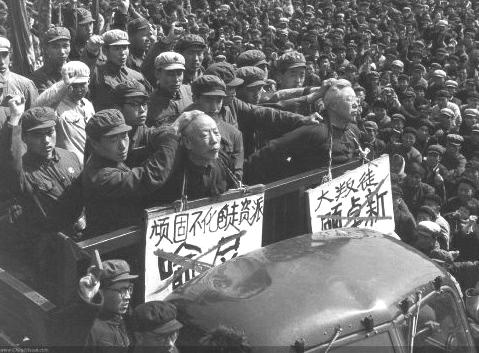
Two Chinese citizens branded
as "Capitalist Roaders" and hence subjected to physical
abuse in the public
part of the Maoist strategy
of "Struggle Sessions" to get Chinese
who were less than revolutionary
to struggle with their "errors" (hundreds
of thousands
were required to do this in "reeducation" (prison)
camps)
Chinese youth conducting
a “Struggle Session,” forced on an adult (probably teacher
or local
official). In some of the worst cases
they would even be beaten to death by
the overwrought youth
Young Maoists attacking an
older Chinaman who did not meet their measure
of proper Maoist demeanor
- 1967
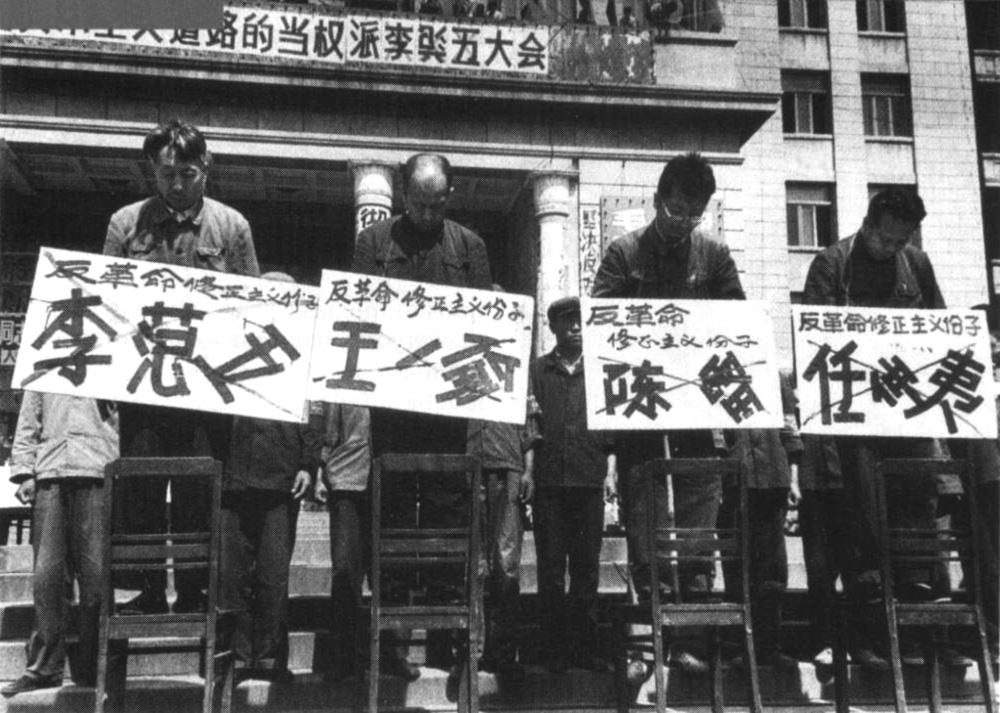
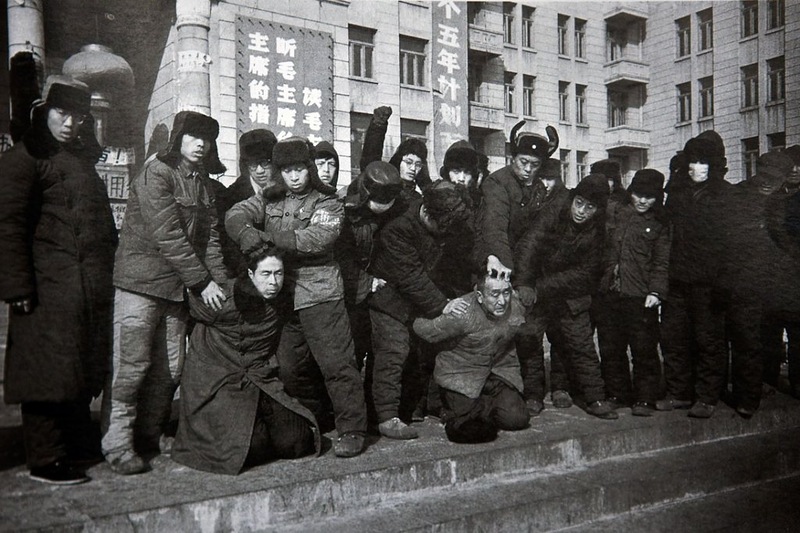
Chinese "Capitalist-Roaders" punished by Red Guards during the Cultural Revolution
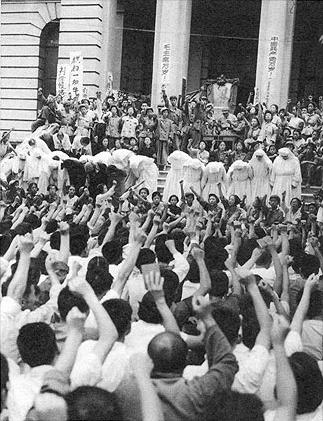
Red Guards denounce a group
of Franciscan nuns
in front of their desecrated church in late August 1966
|
The nuns were expelled from China with great fanfare a few days later. These nuns had remained in China after the Communist victory in 1949. They ran an English school, which many children from Western embassies attended. During the Cultural Revolution their presence in China became evidence to the Red Guards that the revolution was not thorough enough. |
|
| But the real goal of the
Cultural Revolution was to swing such strong public support behind Mao
that he could get rid of all his political adversaries
within the Communist Party (anyone with a personal base of support of his own
within the party) and thus rule China as he
personally chose to do so.
The Chinese Communist leader receiving the greatest focus of Mao's wrath was the party's next in command, Liu Shaoqi - also President of the People's Republic of China |
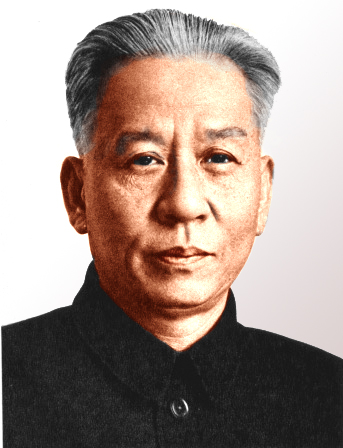
Liu Shaoqi - Chairman (President) of the People's Republic of China (1959-1968)
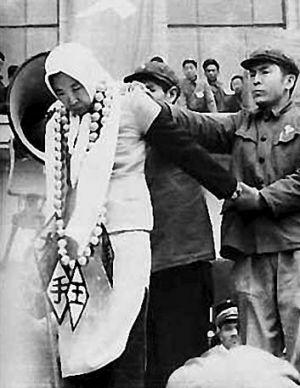
Persecution of Liu Shaoqi's wife, Wang Guangmei - 1967
|
| In
1966 Mao appointed military commander Lin Biao to be next in command
behind himself in the party hierarchy and First Vice President of the
People's Republic of China. Mao's intention was that Lin would
use his military resources to bring some degree of order back to a
China that was spinning out of control. This Lin did. But
becoming quite successful as a Chinese leader was a very dangerous
achievement … as Lin was soon to find out. However, in all of this, the Western World simply looked on these events in China as interesting … but otherwise of no great concern to the West itself. Developments in Vietnam were of far greater interest … especially for America. |
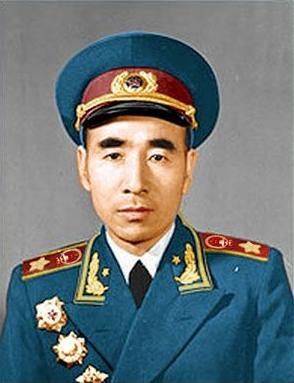
| Originally he was a huge supporter of Mao's youth action against adult authority but then he (and with Zhou Enlai) seemed to want to slow down all the deadly radicalism (the killing of multitudes of party and military officials as well as local leaders). He was supposed to be Mao's successor ... except that he fell out of favor (trying passively to protect himself from the way Chinese politics always seemed to swing back and forthin a very deadly manner). He subsequently died in a plane crash ... escaping China in September of 1971 |

 Miles
H. Hodges
Miles
H. Hodges